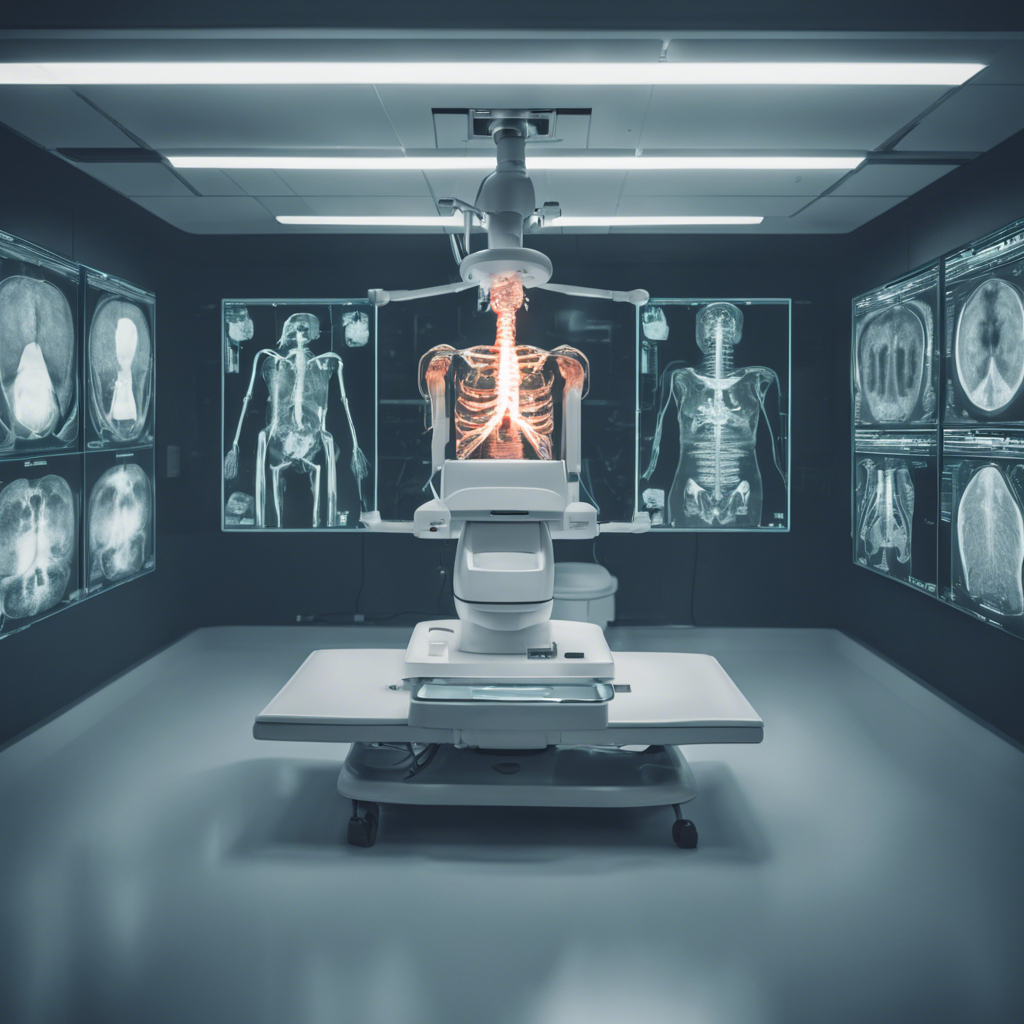

Radiology and AI – an inevitable replacement on the cards

Published on November 3, 2024
Reading Time: 5 min
Medical imaging has evolved significantly since the advent of X-rays. Today, CT, MRI, PET, and other imaging technologies have become integral to diagnostics and patient care. The integration of Artificial Intelligence (AI) into medical imaging is shaping a new paradigm, particularly in data processing, image analysis, and report generation.
The era of extended waits for radiology reports could soon be over. Emerging technologies promise to revolutionize medical image analysis by automating the entire process—from image acquisition to report generation. While initial reports may continue to require validation by human radiologists to refine AI learning, the ultimate goal should be to achieve fully autonomous medical image interpretation within the next 10–15 years. This could significantly reduce costs, particularly manpower expenses, as the demand for radiologists across the country may decrease by as much as 75%.
Overview of AI in Radiology
Radiology has always been at the forefront of technological advancements in medicine. From the discovery of X-rays to the development of CT and MRI scans, imaging technologies have become indispensable tools for diagnosing and monitoring diseases.
However, with the increasing complexity and volume of medical images, radiologists face significant challenges in maintaining both accuracy and efficiency. AI offers a solution by automating routine tasks, rapidly analyzing large datasets, and identifying patterns that may be difficult for the human eye to detect.
AI in radiology primarily involves machine learning (ML) algorithms and deep learning models, particularly Convolutional Neural Networks (CNNs), which excel at processing visual data. These models are trained to detect abnormalities in medical images such as X-rays, CT scans, MRIs, and mammograms. By learning from vast amounts of annotated data, AI systems can assist radiologists in diagnosing diseases including cancer, cardiovascular conditions, and neurological disorders with remarkable precision.[1][2]
Key Applications of AI in Radiology
1. Disease Detection and Diagnosis
AI-powered tools are already being used to detect diseases earlier and more accurately than traditional methods.
Breast Cancer Screening
AI systems can analyze mammograms to detect early signs of breast cancer more accurately than human radiologists. These tools reduce false positives and false negatives, leading to fewer unnecessary procedures and better patient outcomes.[6]
Lung Nodule Detection
AI algorithms can identify lung nodules on chest CT scans with high sensitivity, aiding in the early detection of lung cancer.[9]
Brain Tumor Classification
Deep learning models can accurately segment brain tumors on MRI scans, providing better delineation of tumor boundaries than manual methods.[3][8]
2. Workflow Optimization
AI significantly enhances workflow efficiency by automating time-consuming tasks such as image segmentation, annotation, and report generation. This allows radiologists to focus on more complex cases.
Image Segmentation
AI can automatically segment organs or lesions in medical images, reducing the time required for manual segmentation.
Report Generation
Natural Language Processing (NLP) algorithms can generate preliminary diagnostic reports based on imaging data, streamlining the reporting process.
3. Predictive Analytics
The ability of AI to analyze historical imaging data enables predictive analytics that can forecast disease progression and treatment outcomes.
Prognosis Prediction
AI models can predict long-term mortality risks using chest CT scans and other imaging modalities.[5]
Treatment Response Prediction
AI systems can predict how well a patient will respond to treatment by integrating imaging data with genetic and clinical information.[2]
Technological Advancements Driving AI in Radiology
1. Deep Learning Models
Deep learning has transformed medical image analysis by enabling machines to learn from complex datasets without manual feature extraction. CNNs are particularly effective at detecting microcalcifications in mammograms and segmenting tumors in MRI scans.[8]
These models have surpassed traditional Computer-Aided Detection (CAD) systems in both accuracy and speed.
2. Transfer Learning
Transfer learning allows pre-trained models to be fine-tuned for specific medical tasks using limited datasets. This technique is especially valuable in radiology, where large annotated datasets are often scarce.[8]
Researchers can adapt models trained on general image datasets, such as ImageNet, for specialized applications including the detection of rare diseases.
3. Self-Supervised Learning
Self-supervised learning addresses the challenge of limited labeled data by enabling models to learn from vast amounts of unlabeled data. This approach reduces the need for costly manual annotations while improving model generalization across different institutions.[8]
4. Generative AI
Generative AI is emerging as a powerful tool for creating synthetic medical images that can be used for training and research without compromising patient privacy. This technology has the potential to improve dataset diversity and enhance model performance across various imaging modalities.[6]
Clinical Impact of AI in Radiology
1. Improved Diagnostic Accuracy
One of the greatest benefits of AI in radiology is its ability to improve diagnostic accuracy by identifying subtle abnormalities that may be overlooked by human radiologists.
-
A study at Stanford University demonstrated that an AI system outperformed human radiologists in detecting pneumonia from chest X-rays.[4]
-
AI-assisted mammography screening at Massachusetts General Hospital reduced false positives by 30%, resulting in fewer unnecessary follow-up procedures.[2]
2. Reduced Variability
AI minimizes inter-reader variability by providing more consistent interpretations across different practitioners. This consistency is particularly valuable in regions with limited access to specialized radiologists.[9]
For example, Lunit’s INSIGHT MMG tool has improved breast cancer detection rates among East Asian women by reducing variability between radiologists and breast surgeons.[9]
3. Enhanced Patient Outcomes
AI enables earlier disease detection and more accurate diagnoses, leading to improved patient outcomes. Predictive analytics also supports personalized treatment planning tailored to individual patients.
-
In cardiac imaging, AI algorithms have improved the diagnosis of coronary artery disease and arrhythmias by identifying subtle abnormalities that may be missed during manual interpretation.[6]
-
In oncology, AI systems are being used to guide treatment decisions based on tumor characteristics extracted from imaging data.[7]
Challenges Facing AI Adoption in Radiology
Despite its enormous potential, several challenges must be addressed before AI can be fully integrated into clinical practice.
1. Data Privacy and Ethical Concerns
The use of patient data for training AI models raises significant privacy concerns. Ensuring compliance with regulations such as HIPAA while enabling data sharing across institutions remains a major challenge.[8]
Federated learning is one promising solution that allows models to be trained on decentralized datasets without compromising patient privacy.
2. Need for Expert Annotations
Developing accurate AI models requires large amounts of annotated data, which is often difficult to obtain because manual annotation by experts is time-consuming.[8]
Semi-supervised learning techniques that combine labeled and unlabeled data offer a promising alternative.
3. Generalizability Across Institutions
AI models trained using data from one institution may not perform equally well in another because of differences in imaging protocols, equipment, and patient populations.
Ensuring that AI models generalize effectively across diverse healthcare settings is essential for widespread adoption.[5]
Future Directions
1. Multimodal Learning
Multimodal learning systems combine imaging data with other forms of medical information, such as genomics and Electronic Health Records (EHRs), to provide a more comprehensive understanding of a patient’s condition.[11]
For example, vision transformers have improved lung cancer prognosis accuracy by 20% when combined with patient history data.[8]
2. Explainable AI
As AI becomes increasingly integrated into clinical decision-making, it is essential that these systems provide transparent explanations for their conclusions.
Explainable AI aims to bridge this gap by offering insights into how decisions are made, thereby increasing trust among clinicians and patients alike.[8]
Conclusion
AI is poised to revolutionize radiology by improving diagnostic accuracy, reducing variability among practitioners, optimizing workflows, and enhancing patient outcomes through personalized medicine.
Although challenges such as data privacy and model generalizability remain significant barriers to widespread adoption, ongoing advancements in deep learning techniques—including transfer learning and self-supervised learning—offer promising solutions.
As we move into an era where Artificial Intelligence plays an increasingly central role in healthcare delivery systems worldwide, particularly within radiology, it is becoming clear that embracing these innovations will not only enhance clinical efficiency but also lead to better overall health outcomes.
Referances: