Why Night-Time Power Continuity is a Biological Imperative
Anoop Prathapan 11/9/2026
The Hidden Cost of Power Outages
In conversations surrounding electrical grid management and emergency load-shedding, power is almost universally quantified in megawatts, load curves, and supply deficits. What this arithmetic routinely fails to measure is human physiology.
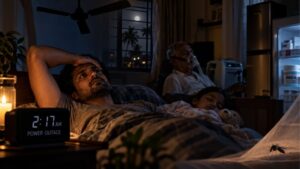
When domestic electricity is severed between 10 p.m. and 6 a.m. in an intensely warm, humid climate, the disruption extends far beyond mere physical discomfort. In tropical settings, nocturnal ambient temperatures coupled with high relative humidity severely impair the body’s primary mechanism of heat dissipation: evaporative cooling via perspiration.
When airflow from fans or cooling systems abruptly ceases, the bedroom transitions from a restorative recovery environment into a micro-climatic thermal stress chamber.
For the human body, this triggers a cascade of adverse clinical events.
1. Thermoregulation and Sleep Architecture Collapse
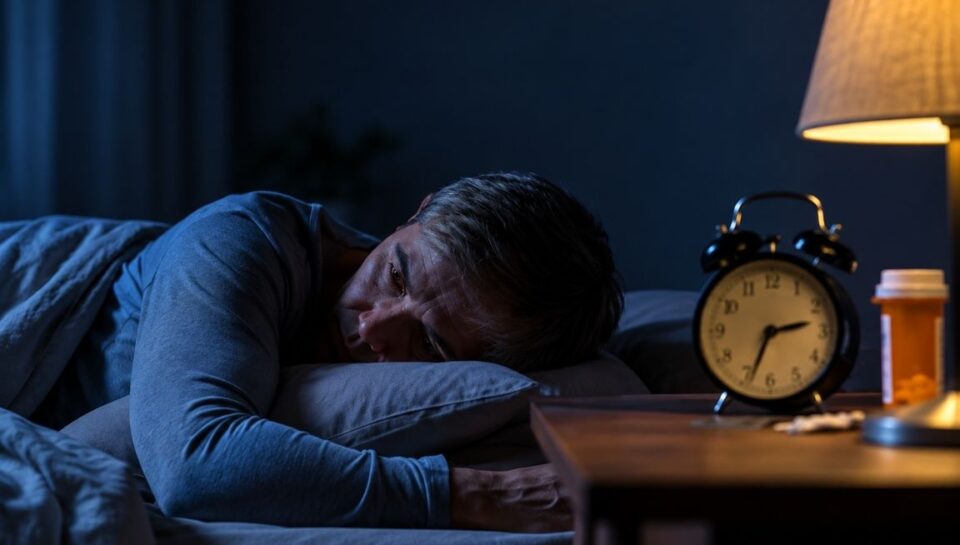
Normal human sleep initiation requires a mandatory drop in core body temperature by approximately 1°C. Ambient heat and stagnant air directly arrest this circadian thermoregulatory decline.
The immediate consequence is not simply insomnia, but severe fragmentation of sleep architecture.
Abrupt thermal awakenings suppress slow-wave sleep (deep restorative sleep) and Rapid Eye Movement (REM) cycles. Depriving the brain of these phases triggers acute sympathetic nervous system hyperactivity.
By morning, rather than waking in a parasympathetic, rested state, individuals experience elevated baseline cortisol levels, impaired cognitive executive function, and psychomotor sluggishness—substantially increasing the daytime risk of workplace accidents, vehicular crashes, and clinical exhaustion.
2. Nocturnal Cardiovascular and Metabolic Surges
For healthy individuals, blood pressure exhibits a natural nocturnal “dip” of 10% to 20%, offering the cardiovascular system vital hemodynamic respite.
In patients subjected to interrupted, heat-stressed sleep, this protective dip is abolished.
Acute awakenings provoked by sweltering indoor environments provoke rapid catecholamine release, causing sudden spikes in nocturnal heart rate and systemic blood pressure.
In patients with pre-existing coronary artery disease, chronic hypertension, or metabolic syndrome, this nocturnal stress pattern substantially elevates the risk of early morning cardiovascular events, dysrhythmias, and transient hypertensive crises.
3. Critical Vulnerability in Geriatric and Chronic Care Populations
The most dangerous impact of nocturnal outages falls upon vulnerable patient populations maintained within home-care settings.
Thermoregulatory Failure in the Elderly
Senescent skin and impaired autonomic responses make elderly individuals far less efficient at dissipating heat.
In a closed, unventilated room, sustained thermal stress can rapidly precipitate dehydration, electrolyte derangements, and acute delirium.
Failure of Home Medical Devices
The modern home is increasingly an extension of the sub-acute care ward.
Countless patients rely on continuous electrical supply for oxygen concentrators, nocturnal BiPAP/CPAP machines for obstructive sleep apnea and hypercapnic respiratory failure, motor-driven air mattresses to prevent pressure ulcers, and nebulizers for acute asthmatic exacerbations.
While some devices feature short-duration internal batteries, sudden or prolonged night-time outages create acute, life-threatening airway and respiratory emergencies in unmonitored domestic settings.
Compromised Insulin and Biological Cold Chains
Domestic refrigerators are routinely used to store temperature-sensitive medications, particularly multi-dose insulin vials, monoclonal antibodies, and specific ophthalmological preparations.
Repeated nocturnal disruptions to the cold chain degrade the molecular stability and potency of these vital therapies, creating unpredictable glycemic excursions in diabetic patients.
4. Pediatric Vulnerability and Vector-Borne Risks
Infants and young children possess a higher body-surface-area-to-mass ratio and immature thermoregulatory mechanisms, rendering them highly susceptible to heat-induced distress, dehydration, and febrile agitation.
Furthermore, when families are forced to open windows at midnight to circulate stagnant, humid air, they dismantle physical barriers against mosquito vectors, immediately increasing household exposure to dengue, chikungunya, and other endemic vector-borne illnesses.
The Clinical Imperative
Electricity between 10 p.m. and 6 a.m. is not a consumer luxury; it is the vital infrastructure that sustains physiological homeostasis, cardiovascular safety, and nocturnal respiratory stability.
From a medical and public health perspective, the human body cannot reschedule its biological dependence on restful sleep, thermoregulation, and continuous medical support.
When public health and utility planning intersect, the non-negotiable biological vulnerability of the nocturnal hours must be treated as an essential health determinant.